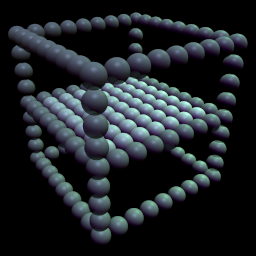
The first part of the REM Framework introduced the fundamental building blocks required to construct an emergent universe. A stationary recursive lattice, persistent Identities, Occupancy, Pressure and Transport together define the local mechanical rules governing the framework.
However, these components alone do not explain the universe we observe. They merely describe the underlying mechanics. The next question therefore becomes: How can such simple local rules produce the extraordinary complexity of reality?
The REM Framework answers this question through the principle of Emergence.
Why is Emergence Necessary?
Traditional physical theories often begin by introducing separate concepts for different physical phenomena. Mass, gravity, electric charge and magnetism are frequently treated as independent properties with their own mathematical descriptions.
The REM Framework follows a different philosophy. Rather than assuming these phenomena independently, it investigates whether they can arise naturally from a much smaller set of recursive mechanical principles.
Emergence therefore represents one of the central objectives of the framework. The goal is not to introduce more assumptions, but to discover how increasingly complex behaviour can develop from simpler foundations.
What is Emergence?
Emergence occurs when the interaction of many simple local processes produces behaviour that is not explicitly programmed into any individual component.
No single lattice node contains gravity. No individual Identity contains magnetism. No Occupancy contains an atom.
Instead, these phenomena arise collectively through the continuous recursive interaction of many neighbouring components.
Complex behaviour is therefore not added to the framework. It is discovered as a consequence of the underlying recursive dynamics.
Local Rules, Global Behaviour
Every interaction within the REM Framework is local. Each node communicates only with its immediate neighbours. Each Identity occupies only one node. Each Transport event transfers only to an adjacent location.
Yet repeated millions of times throughout the lattice, these simple local interactions can generate behaviour that appears continuous, organised and highly structured on much larger scales.
The remarkable complexity of the universe may therefore be the result of extremely simple recursive rules operating consistently over enormous numbers of interactions.
Why This Philosophy?
One of the guiding principles of the REM Framework is to minimise fundamental assumptions. Whenever a new physical phenomenon is encountered, the first question is not, "How should we model it?" Instead, the first question becomes, "Can it emerge from what already exists?"
Only when no simpler explanation can be found is a new fundamental assumption considered. This methodology seeks the smallest possible set of irreducible principles capable of describing the observed universe.
The Search for Emergent Physics
The remainder of the REM Framework applies this philosophy to increasingly complex physical phenomena. Each chapter asks whether a familiar property of nature can arise naturally from the recursive dynamics already established.
Rather than introducing gravity, magnetism or electricity as separate foundations, the framework investigates whether each can emerge from the same underlying mechanical principles.
Whether every phenomenon ultimately proves to be emergent remains an open scientific question. The purpose of the REM Framework is to explore that possibility systematically.
Open Questions
The REM Framework is intended to evolve through investigation rather than assumption. Whenever a new phenomenon is encountered, the first question is whether it can emerge from the existing recursive principles before introducing new fundamental concepts.
For example, the current framework models an Identity as the simplest possible persistent structure. Whether larger persistent objects arise by extending a single Identity or by forming stable compounds of multiple interacting Identities remains an open question for future research.
Such questions are not shortcomings of the framework. They are opportunities to discover whether greater complexity can emerge without increasing the complexity of the underlying foundations.
Looking Forward
The first phenomenon investigated is perhaps the most familiar in everyday experience. Persistent structures appear to attract one another, giving rise to what we recognise as gravity.
Can attraction emerge solely from recursive wave interactions within the lattice, without assuming gravity as a fundamental force?
This question begins the next chapter: Gravity.