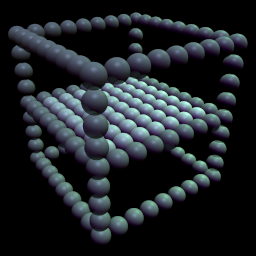
The previous chapter introduced Pressure as the accumulated local imbalance experienced by an Occupancy. Pressure explains why movement becomes favourable, but it does not explain how movement actually occurs.
This leads to the final question of this sequence. How can continuous motion emerge if the lattice itself remains stationary and an Identity occupies only one node at a time?
The REM Framework answers this question through Transport. Transport is the process by which an Identity changes its Occupancy from one lattice node to another. Rather than moving continuously through space, motion emerges from a sequence of local Occupancy transfers.
Why is Transport Necessary?
Without Transport, Pressure could accumulate indefinitely without ever producing movement. The framework would describe the tendency to move, but no actual motion would occur.
Transport therefore converts accumulated Pressure into physical movement. It provides the final step connecting local mechanical interactions with the observable motion of persistent structures.
Together, Identity, Occupancy, Pressure and Transport form a complete mechanism for emergent movement.
What is Transport?
Transport is the process by which an Identity transfers its Occupancy from its current lattice node to one of its neighbouring nodes. Only neighbouring nodes participate in each transfer. No long-distance movement or global knowledge is required.
When a transfer occurs, the Identity itself remains unchanged. Only the Occupancy changes. The previous node becomes unoccupied while the neighbouring node becomes occupied by the same persistent Identity.
The lattice itself remains stationary throughout the entire process.
When Does Transport Occur?
Transport does not occur continuously. Instead, accumulated Pressure is compared against the transport conditions established by the framework.
Once sufficient Pressure has accumulated along one direction, the Occupancy transfers to the neighbouring node corresponding to that direction.
Following the transfer, the Pressure associated with the previous Occupancy is reset or updated according to the transport rules, allowing the process to begin again at the new location.
Locality
Every Transport event is completely local. An Identity never skips nodes and never requires information beyond its immediate neighbourhood.
This locality is one of the central principles of the REM Framework. Complex motion emerges entirely from repeated local interactions without requiring global forces or non-local communication.
The path followed by an Identity therefore emerges naturally from many individual local decisions rather than from a predetermined trajectory.
Emergent Motion
Although each individual Transport event moves an Identity by only one lattice node, repeated Occupancy transfers produce smooth macroscopic motion.
From the perspective of an external observer, an Identity appears to move continuously through space. Internally, however, every movement consists only of discrete transitions between neighbouring nodes.
Continuous motion therefore emerges from discrete recursive dynamics.
Emergent Velocity and Momentum
Velocity is not assigned directly to an Identity. Instead, it emerges from the frequency and direction of successive Transport events. An Identity that transports more frequently appears to move faster than one whose Pressure accumulates more slowly.
Likewise, momentum is expected to emerge from the continued accumulation and redistribution of Pressure during repeated Occupancy transfers rather than existing as an independent fundamental property.
These quantities therefore arise naturally from the recursive dynamics instead of being introduced as separate assumptions.
The Complete Mechanism
The four concepts introduced throughout these chapters form a single recursive process.
An Identity continuously excites the surrounding lattice. Its Occupancy determines where this excitation occurs. Local mechanical imbalances accumulate as Pressure. Once sufficient Pressure has developed, Transport transfers the Occupancy to a neighbouring node. The process then repeats recursively.
No global controller directs movement. Every observable trajectory emerges entirely from local recursive interactions.
Current Status
The Transport mechanism provides the final component required for describing motion within the REM Framework. Movement is not fundamental but emerges from the interaction between Identity, Occupancy, Pressure and recursive lattice dynamics.
Conclusion
Pressure explains how an Identity is transported through the lattice, but it does not explain why transport begins. Before pressure can accumulate, an Identity must first detect a difference in its local surroundings. Without such a difference, every neighbouring direction remains mechanically equivalent, no pressure is accumulated, and no transport occurs.
The REM Framework proposes that every physical response begins with the Local Imbalance Principle: an Identity responds only to locally measured differences in the state of its neighbouring lattice nodes. The Identity does not detect distant objects directly. Instead, it compares the measurable properties of its immediate neighbours and responds only to the resulting imbalance.
This principle provides a purely local mechanical foundation for transport and introduces a unified way of investigating emergent behaviour. Rather than requiring separate mechanisms for different physical phenomena, the REM Framework explores whether gravity, electricity, magnetism and other interactions may originate from different kinds of locally measured imbalances.
The next chapter introduces the concept of Imbalance and explains how local measurements may determine both the magnitude and the direction of an emerging physical response.
Future research will investigate how increasingly complex phenomena—including gravitational attraction, magnetism, electric charge, atomic structure and other physical behaviour—can emerge from this same recursive mechanism.
Looking Forward
The REM Framework has now introduced the fundamental concepts required to describe persistent structures and their motion within a stationary recursive lattice.
The next stage is no longer to define new building blocks, but to investigate the physical phenomena that emerge from their interaction. How can waves produce attraction? How can rotating oscillations produce magnetism? How can local transport generate electric current? And how can increasingly complex structures eventually give rise to the universe we observe?
The remainder of the REM Framework explores these questions by allowing complex behaviour to emerge from the simple recursive principles established in the preceding chapters.