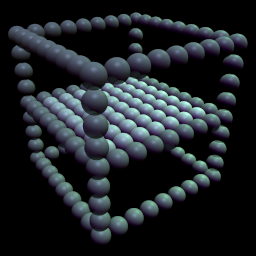
Featured

Identity

One of the fundamental questions in the REM Framework is not how matter behaves, but rather why persistent structures exist at all. If every disturbance naturally spreads through the lattice and eventually returns to equilibrium, why does the universe contain objects that continue to exist?

The REM Framework approaches this question by introducing the concept of an Identity. An Identity is not assumed to be a particle, a field, or a physical object in the conventional sense. Instead, it represents the simplest irreducible entity currently required for constructing an emergent universe.


Why is an Identity Necessary?

The recursive lattice continuously seeks mechanical equilibrium. Whenever a node is disturbed, the disturbance propagates through neighbouring nodes until the lattice gradually returns to its equilibrium state. This behaviour produces stable wave propagation, but it also reveals an important limitation: ordinary disturbances do not persist indefinitely.

Without an additional mechanism, every excitation eventually disappears. Consequently, a universe consisting solely of recursive lattice dynamics would contain waves, but no persistent localized structures capable of representing matter.

The Identity is therefore introduced as the simplest known mechanism capable of maintaining a localized excitation while remaining completely embedded within the lattice. At the current stage of the REM Framework, the Identity is treated as an irreducible assumption. Whether such persistence can eventually emerge from simpler recursive dynamics remains an open research question.


What is an Identity?

An Identity is a persistent oscillator occupying exactly one lattice node at any given update. It continuously excites the surrounding lattice through its oscillatory motion while remaining mechanically coupled to neighbouring nodes.

The Identity is not the lattice itself. The lattice defines space. The Identity introduces persistent activity within that space.

Unlike traditional particles, an Identity does not possess intrinsic mass or gravitational properties. Instead, these properties are expected to emerge from the recursive interaction between the oscillating Identity and the surrounding lattice.


Oscillation

Each Identity oscillates according to a configurable oscillation function. The oscillation may occur along one, two or three spatial axes and may use different waveform types, including sinusoidal, cosine or square oscillations.

The oscillation itself is not intended to represent a physical particle moving through space. Instead, it acts as the continuous mechanical excitation responsible for generating recursive lattice disturbances.

Different oscillation amplitudes, frequencies and orientations may eventually produce different emergent phenomena, such as gravitational attraction, wave interference, magnetism or other physical behaviour. Determining these relationships remains an important area of future investigation.


Persistence

Persistence is one of the defining characteristics of an Identity. Unlike ordinary disturbances, which naturally disperse throughout the lattice, an Identity continuously maintains its oscillatory behaviour.

This persistence allows information to remain localized while simultaneously generating continuous recursive interactions with neighbouring nodes. Without persistence, long-lived structures could not exist, and an emergent universe would consist only of transient waves.


Relationship with the Lattice

The lattice remains stationary. Only local node positions oscillate around their equilibrium locations. The Identity therefore does not move the lattice itself, but continuously excites the recursive dynamics already defined by the Fundamental Node Equation.

The recursive lattice and the Identity fulfil different roles. The lattice provides the mechanical structure of space, while the Identity provides persistent localized excitation. Neither replaces the other. Together they form the foundation upon which increasingly complex emergent behaviour can develop.


Current Status

The REM Framework currently considers the Identity to be an irreducible assumption. Extensive investigation has been carried out to determine whether persistent oscillations can emerge directly from recursive lattice dynamics. Although self-sustaining oscillations can be constructed under specific conditions, no general mechanism has yet been found that naturally produces persistent localized structures without introducing additional assumptions.

For this reason, the Identity presently remains one of the fundamental building blocks of the framework. Future research may eventually reveal a deeper mechanism from which the Identity itself can emerge.


Looking Forward

An oscillating Identity continuously excites the surrounding lattice, but how can such an excitation remain localized while the lattice itself remains stationary? How can an Identity move through the lattice without transporting the lattice itself?

These questions lead directly to the next concept in the REM Framework: Occupancy.

Featured

Wave Propagation


Overview

Wave propagation is one of the first emergent phenomena of the Recursive Emergent Mechanics (REM) Framework. It arises naturally from the recursive interaction of neighbouring nodes and does not require a separate wave equation or propagation algorithm.

Within the REM Framework, a wave is the recursive propagation of a local mechanical disturbance through the lattice. Each node responds only to the positions of its directly connected neighbouring nodes. As neighbouring nodes update their mechanical state, the disturbance is transferred recursively from one neighbourhood to the next.

Wave propagation is therefore not an independent mechanism. It is a direct consequence of the Fundamental Node Equation and the Recursive Node Dynamics described in the preceding articles.


Local Mechanical Disturbances

A wave begins when one or more nodes are displaced from their local equilibrium. This displacement creates a mechanical imbalance within the surrounding neighbourhood.

During the following recursive update, neighbouring nodes measure this imbalance and compute restoring accelerations using the Fundamental Node Equation. Their resulting motion then modifies the mechanical balance experienced by the next neighbouring nodes.

Rather than remaining localized, the disturbance is therefore transmitted recursively throughout the lattice. Every node participates only through local interactions, yet the collective behaviour produces the propagation of a mechanical wave across the lattice.


Propagation Through Recursive Updates

Mechanical disturbances propagate because every recursive update transfers the local mechanical imbalance from one neighbourhood to the next. No node transmits information directly over long distances, and no global coordination exists within the lattice.

Instead, each node responds only to the current mechanical state of its neighbouring nodes. The updated node state then becomes part of the neighbourhood evaluated during the next recursive update. Repeated execution of this process advances the disturbance through the lattice.

Wave propagation therefore emerges entirely from the recursive application of local mechanical interactions.


Wave Speed

The speed of a mechanical wave is determined by the recursive transfer of local mechanical disturbances between neighbouring nodes. During each recursive update, every node responds to the current state of its directly connected neighbours. The collective effect of these local interactions determines how quickly a disturbance propagates through the lattice.

Unlike continuous wave models, the REM Framework does not assume an independently defined wave velocity. Instead, wave propagation emerges directly from the recursive update cycle governed by the Fundamental Node Equation.

The propagation speed depends on the mechanical parameters of the recursive lattice. In the current implementation, a configurable wave-speed constant determines the magnitude of each velocity update and therefore controls the speed at which disturbances travel through the lattice.

Changing this parameter alters the propagation speed without modifying the underlying recursive mechanics. The mechanism responsible for wave propagation remains identical; only the rate at which recursive updates transfer the disturbance changes.


Wave Interference

One of the earliest demonstrations of the REM Framework was the emergence of wave interference. When multiple mechanical disturbances propagate simultaneously through the lattice, every node continues to apply exactly the same local recursive update rule.

Because each node responds only to the combined mechanical state of its neighbouring nodes, overlapping disturbances naturally interact. No additional interference algorithm is introduced, and no node distinguishes between individual wave sources.

The resulting behaviour produces regions where local disturbances reinforce one another as well as regions where they reduce one another. These interference patterns emerge solely from the recursive mechanics of the lattice.

Wave interference is therefore not an independent phenomenon added to the simulation. It is a natural consequence of neighbouring nodes recursively responding to their local mechanical environment.


Constructive Interference

Constructive interference occurs when neighbouring disturbances combine to increase the local mechanical displacement. The resulting positional differences generate larger restoring accelerations, producing regions of increased wave amplitude.

Within the REM Framework, constructive interference emerges naturally whenever multiple disturbances reinforce the same local mechanical imbalance.


Destructive Interference

Destructive interference occurs when neighbouring disturbances reduce the local mechanical imbalance. As the positional differences become smaller, the resulting restoring accelerations are likewise reduced, producing regions of diminished wave amplitude.

Both constructive and destructive interference arise from the same recursive update mechanism. The REM Framework requires no additional rules to distinguish between them.


Emergent Wave Propagation

Within the REM Framework, wave propagation is not introduced as a fundamental law. Instead, it emerges naturally from the recursive interaction of neighbouring nodes. Every node follows exactly the same local mechanical rules, regardless of whether a wave is present.

The propagation of a wave is therefore not computed directly. It is the collective consequence of many local recursive updates performed throughout the lattice.

This distinction is fundamental. The REM Framework does not define a separate mechanism for wave propagation. The recursive mechanics of the lattice alone are sufficient to generate travelling mechanical disturbances.

Wave propagation is therefore an emergent property of the recursive lattice rather than an independent assumption of the framework.


Summary

Wave Propagation describes how local mechanical disturbances travel through the recursive lattice of the REM Framework. Every node responds exclusively to the relative positions of its directly connected neighbouring nodes, allowing disturbances to propagate recursively without any global coordination.

The lattice itself remains stationary while individual nodes oscillate around their local equilibrium positions. The travelling wave is therefore the propagation of a mechanical disturbance rather than the transport of the lattice itself.

Constructive and destructive interference emerge naturally from the recursive interaction of neighbouring disturbances. No additional propagation or interference rules are introduced beyond the recursive update cycle.

Wave propagation therefore represents one of the earliest emergent phenomena of the REM Framework and forms the mechanical foundation for the introduction of persistent oscillating identities in the following article.


Key Takeaways

  • Wave propagation emerges naturally from recursive local interactions.
  • The lattice remains stationary while mechanical disturbances propagate.
  • Every node oscillates locally around its equilibrium position.
  • No separate propagation algorithm is required.
  • Constructive and destructive interference arise naturally from the same recursive mechanics.
  • Wave propagation provides the foundation for persistent oscillating identities.
Featured

Fundamental Node Equation


Overview

The Fundamental Node Equation is the core mechanical equation of the Recursive Emergent Mechanics (REM) Framework. It defines how every node within the discrete lattice responds to the positions of its directly connected neighbouring nodes.

The Fundamental Node Equation determines the acceleration of a node entirely from the relative positions of its directly connected neighbouring nodes. Each node measures only the relative positions of its neighbours, producing a restoring acceleration whenever the local neighbourhood deviates from equilibrium.

This single recursive equation forms the mechanical foundation of the entire framework. Wave propagation, interference, identity oscillations, occupancy transport, and the higher-level emergent phenomena described later all originate from repeated applications of this equation.


Mechanical Principle

The REM Framework is based on a simple mechanical principle:

A node never responds to absolute position. It responds only to the relative positions of its neighbouring nodes.

Because every node follows the same local rule, the lattice behaves as a distributed mechanical system. Local disturbances generate restoring accelerations that propagate recursively throughout the lattice while preserving its equilibrium configuration.


The Fundamental Node Equation

The acceleration of every node is determined by the average positional difference between the node and its neighbouring nodes.

$$ \mathbf{a} = \frac{k^{2}}{|N|} \sum_{n\in N} (\mathbf{n}-\mathbf{p}) $$

where:

  • $\mathbf{a}$ = node acceleration
  • $\mathbf{p}$ = current node position
  • $\mathbf{n}$ = neighbouring node position
  • $|N|$ = number of neighbouring nodes
  • $k$ = wave-speed constant

For a regular three-dimensional lattice, each node has up to six neighbouring nodes, giving $$|N|=6$$ for interior nodes. Boundary nodes naturally contain fewer neighbours and are evaluated using only their existing neighbour connections.


Interpretation

The Fundamental Node Equation measures the local mechanical imbalance surrounding a node. If all neighbouring positions remain in perfect equilibrium, the average positional difference is zero and the resulting acceleration is also zero.

When one or more neighbouring nodes are displaced, the local balance is disturbed. The equation immediately generates a restoring acceleration that acts to reduce this imbalance. As neighbouring nodes respond in subsequent recursive updates, the disturbance propagates naturally through the lattice as a mechanical wave.

This behaviour is entirely local. No node possesses knowledge of the global lattice or of distant nodes. Every update depends exclusively on information obtained from directly connected neighbours.


Recursive Time Evolution

The REM Framework does not include an explicit time variable within the Fundamental Node Equation. Instead, temporal evolution is represented by recursive state updates. Each application of the equation advances the mechanical state of the lattice by one recursive step.

Consequently, repeated recursive application of the Fundamental Node Equation defines the evolution of the entire mechanical system.


Relationship to the REM Framework

The Fundamental Node Equation is the first and most fundamental mechanical equation of the REM Framework. All higher-level mechanisms introduced in later chapters build upon the recursive behaviour established by this equation.

Subsequent articles describe how recursive node dynamics produce wave propagation, how oscillating identities interact with the lattice, and how occupancy, pressure, and transport give rise to increasingly complex emergent behaviour.


Key Takeaways

  • The Fundamental Node Equation defines the acceleration of every node in the lattice.
  • Acceleration is determined solely by the average positional differences between neighbouring nodes.
  • Only local neighbour information is required.
  • Recursive updates replace an explicit time variable.
  • The equation provides the mechanical foundation for all higher-level behaviour within the REM Framework.

Why the Fundamental Node Equation Is Stable

One of the defining characteristics of the Fundamental Node Equation is that it naturally preserves the equilibrium of the lattice. This stability is not introduced through additional correction terms or external constraints, but emerges directly from the recursive structure of the equation itself.

Consider a lattice in its equilibrium configuration. Every node occupies its equilibrium position, and each neighbouring node is positioned symmetrically around it.

The sum of the positional differences between the node and all of its neighbours therefore becomes:

$$ \sum_{n\in N} (\mathbf{n}-\mathbf{p}) = \mathbf{0} $$

Substituting this result into the Fundamental Node Equation immediately gives:

$$ \mathbf{a} = \mathbf{0} $$

Since the acceleration is zero, the velocity remains unchanged. If the lattice is initially at rest, the velocity is also zero, and the node therefore remains at its current position.

Because the position does not change, the neighbouring positional differences remain unchanged during the next recursive update. The acceleration therefore remains zero again.

This recursive process repeats indefinitely, preserving the equilibrium configuration of the lattice without requiring any additional stabilization mechanism.

The equilibrium state is therefore a self-consistent recursive solution of the Fundamental Node Equation.


A Locally Self-Correcting System

When a node is displaced from its equilibrium position, the balance between its neighbouring nodes is disturbed. The average positional difference is no longer zero, causing the Fundamental Node Equation to generate a restoring acceleration directed toward the local equilibrium configuration.

As neighbouring nodes respond to this disturbance during subsequent recursive updates, the restoring behaviour propagates naturally throughout the lattice. The disturbance is therefore distributed across neighbouring nodes rather than remaining localized.

The lattice behaves as an elastic mechanical medium. Local disturbances generate restoring accelerations that are distributed recursively through neighbouring nodes, allowing mechanical waves to propagate while preserving the lattice's equilibrium configuration.

A mechanically consistent recursive lattice must possess a locally self-correcting update rule. Without such a restoring mechanism, recursive evolution cannot maintain a stable spatial structure.


Locality

The REM Framework is based upon the principle of locality. Every node interacts exclusively with its directly connected neighbouring nodes. No node possesses knowledge of the global lattice, the position of distant nodes, or the overall state of the system.

During each recursive update, a node measures only the relative positional differences between itself and its neighbouring nodes. These local measurements are sufficient to determine the node's acceleration through the Fundamental Node Equation.

Consequently, every change within the lattice originates from local mechanical interactions. Information is never transmitted instantaneously across the lattice but propagates recursively from one neighbouring node to the next.

This locality is one of the defining characteristics of the REM Framework. Complex global behaviour is not prescribed by global equations or external coordination. Instead, it emerges naturally from the repeated application of simple local interactions throughout the lattice.

Because every node follows exactly the same mechanical rule, the lattice behaves as a unified mechanical system while each individual node remains aware only of its immediate surroundings.


Recursive Evolution

The evolution of the REM Framework is entirely recursive. During each update, every node evaluates the current state of its neighbouring nodes, calculates its new acceleration, and updates its mechanical state. The resulting lattice configuration becomes the input for the next recursive update.

Unlike many mathematical formulations, the Fundamental Node Equation does not contain an explicit time variable. The progression of the simulation is instead represented by the repeated application of the recursive update itself.

Within the REM Framework, temporal evolution is therefore represented by recursive state updates. Each application of the Fundamental Node Equation advances the mechanical state of the lattice by one recursive step.

The recursive update is therefore not simply a numerical implementation technique. It is an integral part of the mathematical structure of the REM Framework and defines how the lattice evolves over time.


From Local Motion to Wave Propagation

When a node is displaced from its equilibrium position, the resulting restoring acceleration affects only that node during the current recursive update. During the following updates, neighbouring nodes respond to the change in position, generating their own restoring accelerations.

This sequential transfer of mechanical disturbance causes the motion to propagate throughout the lattice. The wave is therefore not transported as a separate object but emerges naturally from the recursive interactions between neighbouring nodes.

Wave propagation is therefore an inherent consequence of the Fundamental Node Equation. No additional propagation algorithm, transmission rule, or wave equation is required. The recursive mechanical interactions alone produce the observed propagation of disturbances through the lattice.


Summary

The Fundamental Node Equation establishes the fundamental mechanics of the REM Framework. By combining local neighbour interactions with recursive updates, it produces a stable mechanical lattice capable of supporting propagating disturbances while continuously preserving its equilibrium configuration.

This equation serves as the foundation upon which all subsequent mechanisms of the REM Framework are constructed. The following articles build upon this foundation by introducing recursive node dynamics, identity oscillations, occupancy, pressure, transport, and the higher-level emergent phenomena that arise from these interactions.


Key Takeaways

  • The Fundamental Node Equation is the fundamental mechanical equation of the REM Framework.
  • Every node responds only to its directly connected neighbouring nodes.
  • The lattice is locally self-correcting and naturally preserves its equilibrium configuration.
  • Recursive state updates replace an explicit time variable.
  • Wave propagation emerges naturally from recursive local interactions.
  • The Fundamental Node Equation provides the foundation for all higher-level mechanisms within the REM Framework.
Featured

Recursive Node Dynamics


Overview

Recursive Node Dynamics describes how every node within the Recursive Emergent Mechanics (REM) Framework evolves during each recursive update. While the Fundamental Node Equation defines how a node computes its acceleration from neighbouring nodes, Recursive Node Dynamics defines the complete mechanical update cycle that transforms one lattice state into the next.

Every node within the lattice follows exactly the same mechanical rules. There are no special nodes, no preferred locations, and no global controller. Each node evolves independently by observing only its directly connected neighbours, making the behaviour of the entire lattice a consequence of purely local recursive interactions.

The repeated execution of this update cycle causes mechanical disturbances to propagate naturally throughout the lattice. As a result, complex global behaviour emerges from the recursive evolution of simple local mechanics.


The Node

The node is the fundamental mechanical element of the REM Framework. Collectively, nodes form a discrete three-dimensional lattice that represents the underlying mechanical structure of the framework.

Each node occupies a single position within the lattice and maintains direct connections only to its neighbouring nodes. The node itself possesses no knowledge of the global structure of the lattice and cannot interact directly with distant nodes. Every mechanical interaction is therefore completely local.

Although every node follows exactly the same recursive update rule, each node evolves independently according to the mechanical state of its own local neighbourhood. The global behaviour of the lattice therefore emerges from the collective evolution of all nodes rather than from any centralized control mechanism.


Mechanical State

Each node maintains a mechanical state consisting of three fundamental quantities:

  • $\mathbf{p}$ — Position
  • $\mathbf{v}$ — Velocity
  • $\mathbf{a}$ — Acceleration

The position represents the current displacement of the node within the lattice. The velocity describes how the position changes during successive recursive updates, while the acceleration is calculated using the Fundamental Node Equation from the node's neighbouring positions.

Together, these three quantities completely describe the mechanical state of an individual node. No additional intrinsic properties are required for the fundamental Version 0.1 mechanics.


Neighbour Topology

The REM Framework employs a discrete three-dimensional lattice in which every interior node is connected to six neighbouring nodes.

These neighbours correspond to the six orthogonal directions:

  • Right
  • Left
  • Top
  • Bottom
  • Front
  • Back

The Fundamental Node Equation operates exclusively on these neighbouring nodes. Consequently, every recursive update depends only on the local topology surrounding each individual node.

Boundary nodes naturally possess fewer neighbouring connections. The same recursive update rule is applied using only the neighbours that exist, preserving the locality of the framework throughout the lattice.


The Recursive Update Cycle

The evolution of the REM Framework is governed by a recursive update cycle. During each recursive update, every node performs the same sequence of mechanical operations. The updated state of the lattice then becomes the starting point for the next recursive update.

The complete update cycle consists of four successive steps:

  1. Measure the positions of all neighbouring nodes.
  2. Calculate the node's acceleration using the Fundamental Node Equation.
  3. Update the node's velocity.
  4. Update the node's position.

After every node has completed this sequence, the recursive update is finished and the lattice advances to its next mechanical state. Repeated execution of this cycle produces the continuous evolution of the lattice.


Step 1 — Measuring the Neighbourhood

Each node begins by measuring the relative positions of its directly connected neighbouring nodes. No information beyond the local neighbourhood is required. The node neither stores nor evaluates the state of distant nodes.

For every neighbouring node, the positional difference is determined as:

$$ \Delta\mathbf{p}_i=\mathbf{n}_i-\mathbf{p} $$

where $\mathbf{n}_i$ denotes the position of the i-th neighbouring node and $\mathbf{p}$ is the current node position.

These local positional differences provide the mechanical information required by the Fundamental Node Equation.


Step 2 — Computing the Acceleration

The measured positional differences are averaged to determine the restoring acceleration acting on the node.

$$ \mathbf{a} = \frac{k^{2}}{|N|} \sum_{n\in N} (\mathbf{n}-\mathbf{p}) $$

This equation produces the acceleration that reduces the local mechanical imbalance surrounding the node. When the neighbourhood is perfectly balanced, the average positional difference is zero and the resulting acceleration is also zero.

The acceleration therefore depends exclusively on the current configuration of the neighbouring nodes.

The constant $k$ determines the propagation speed of mechanical disturbances through the lattice. Increasing $k$ increases the rate at which information propagates, while maintaining the recursive structure of the update.


Step 3 — Updating the Velocity

Once the acceleration has been determined, the node updates its velocity by adding the newly computed acceleration to its current velocity.

$$ \mathbf{v}_{n+1} = \mathbf{v}_{n} + \mathbf{a} $$

The updated velocity represents the node's new rate of motion and is immediately used during the position update that follows.


Step 4 — Updating the Position

Finally, the node updates its position using the newly calculated velocity together with the current acceleration.

$$ \mathbf{p}_{n+1} = \mathbf{p}_{n} + \mathbf{v}_{n+1} + \frac{1}{2}\mathbf{a} $$

The updated position represents the mechanical state of the node after one complete recursive update. This new state is then used during the following recursive update together with the updated states of all neighbouring nodes.


Recursive Equilibrium

The recursive update cycle possesses a natural equilibrium state. When every node occupies its equilibrium position, the positional differences between neighbouring nodes become perfectly balanced. Consequently, the Fundamental Node Equation produces zero acceleration.

$$ \mathbf{a} = \mathbf{0} $$

Since the acceleration is zero, the node's velocity remains unchanged. If the lattice is initially at rest, the velocity also remains zero.

$$ \mathbf{v}_{n+1} = \mathbf{v}_{n} $$

Because the velocity does not change, the node position likewise remains unchanged.

$$ \mathbf{p}_{n+1} = \mathbf{p}_{n} $$

The recursive update therefore reproduces exactly the same mechanical state during every subsequent update. The equilibrium configuration is consequently a self-consistent recursive solution of the REM Framework.

Unlike many numerical simulations that require additional stabilization techniques, the stability of the REM Framework follows directly from the recursive mechanics themselves.


Mechanical Restoration

When a node is displaced from its equilibrium position, the balance between neighbouring nodes is disturbed. The resulting positional differences are no longer symmetric, causing the Fundamental Node Equation to generate a restoring acceleration directed toward equilibrium.

The greater the displacement from equilibrium, the larger the resulting restoring acceleration becomes. Every recursive update therefore acts to reduce the local mechanical imbalance within the lattice.

This behaviour causes the lattice to respond as an elastic mechanical medium. Local disturbances generate restoring accelerations that are distributed recursively through neighbouring nodes, allowing mechanical waves to propagate while preserving the lattice's equilibrium configuration.

The recursive update cycle is therefore locally self-correcting. Mechanical disturbances do not destroy the lattice but instead produce temporary deviations that naturally propagate and gradually restore local equilibrium.

A mechanically consistent recursive lattice must possess a locally self-correcting update rule. Without such a restoring mechanism, recursive evolution cannot maintain a stable spatial structure.


Emergence of Mechanical Waves

The self-correcting nature of the recursive update cycle does not immediately restore a displaced node to equilibrium. Instead, the restoring acceleration causes the node to move, altering the mechanical balance experienced by its neighbouring nodes during the following recursive update.

These neighbouring nodes then compute their own restoring accelerations, causing the disturbance to spread recursively throughout the lattice. Mechanical motion is therefore transferred from one local neighbourhood to the next through successive recursive updates.

A mechanical wave is therefore not introduced as a separate object or physical entity. It emerges naturally from the recursive interaction between neighbouring nodes governed by the Fundamental Node Equation.

The lattice behaves as an elastic mechanical medium in which every local disturbance generates a chain of restoring accelerations. The propagation of these restoring interactions forms the mechanical waves observed within the REM Framework.

Wave propagation is therefore an inherent consequence of the recursive mechanics rather than an independent assumption of the framework.


Recursive Stability

The recursive update cycle of the REM Framework is inherently stable because every update is governed by the same local mechanical principles. When the lattice is in equilibrium, each node experiences zero net acceleration, causing the recursive update to reproduce the same mechanical state indefinitely.

When a node is displaced from equilibrium, the resulting acceleration acts to reduce the local mechanical imbalance rather than amplify it. Each recursive update therefore contributes to restoring the equilibrium configuration of the lattice.

Unlike many recursive systems that require additional stabilization techniques, the REM Framework derives its stability directly from the mechanical structure of the Fundamental Node Equation. Stability is therefore an intrinsic property of the recursive mechanics rather than an external correction applied during the simulation.

The recursive update does not attempt to force the lattice toward equilibrium. Instead, equilibrium emerges naturally because the locally averaged positional differences continuously generate restoring accelerations. This self-correcting behaviour allows the lattice to remain mechanically stable while simultaneously supporting the propagation of mechanical disturbances.

Consequently, the REM Framework combines two properties that are both essential for a mechanical lattice: long-term structural stability and the ability to transmit mechanical waves through recursive local interactions.


From Node Dynamics to Wave Propagation

Recursive Node Dynamics describes how individual nodes evolve through successive recursive updates. Although every node follows the same simple mechanical rules, the collective interaction of many nodes produces behaviour that extends beyond the motion of a single node.

When one node is disturbed, the resulting restoring accelerations influence neighbouring nodes during subsequent recursive updates. These neighbouring nodes then generate restoring accelerations of their own, causing the disturbance to propagate throughout the lattice.

Mechanical wave propagation therefore emerges naturally from the recursive interaction of neighbouring nodes. No additional propagation mechanism is introduced beyond the recursive update cycle itself.

The following article explores how this collective behaviour gives rise to propagating mechanical waves and interference patterns within the REM Framework.


Summary

Recursive Node Dynamics describes the complete mechanical evolution of every node within the REM Framework. Beginning with the Fundamental Node Equation, each node recursively computes its acceleration from its neighbouring nodes, updates its velocity, and finally updates its position.

Because every node follows the same local update rule, the lattice naturally maintains its equilibrium while remaining capable of transmitting mechanical disturbances. The recursive interaction between neighbouring nodes gives rise to stable wave propagation without requiring any additional propagation rules or global coordination.

Recursive Node Dynamics therefore provides the mechanical foundation upon which all higher-level mechanisms of the REM Framework are built.


Key Takeaways

  • Every node follows the same recursive mechanical update cycle.
  • Nodes interact exclusively with their directly connected neighbours.
  • The mechanical state of a node consists of its position, velocity, and acceleration.
  • The recursive update cycle naturally preserves the lattice's equilibrium configuration.
  • Mechanical disturbances propagate recursively through neighbouring nodes as waves.
  • Recursive Node Dynamics forms the mechanical foundation for the higher-level mechanisms of the REM Framework.